“In Actiwatch studies, accelerometer and activity were consistently important, but sleep features were rarely examined. In smart band studies, HR, steps, sleep, and phone usage were essential, while GPS, electrodermal activity (EDA), and skin temperature showed high importance when used, suggesting opportunities for broader adoption. In smartwatch studies, sleep and HR emerged as core features, whereas steps and accelerometer were widely used but often not identified as important.”
“Actiwatch studies mainly emphasized accelerometer and activity but underused sleep features; smart bands highlighted HR, steps, sleep, and phone usage, with EDA, skin temperature, and GPS showing additional promise; and smartwatches most reliably leveraged sleep and HR, while steps and accelerometer were widely used yet less effective. These findings suggest that while a shared core set of features exists, optimizing digital phenotyping requires tailoring feature selection to the characteristics of each device type. To advance this field, improving data accessibility, particularly in smartwatch ecosystems, and adopting standardized reporting frameworks will be essential to enhance comparability, reproducibility, and future meta-analytic integration.”
— Key Features of Digital Phenotyping for Monitoring Mental Health Disorders: Systematic Review
The data is a lot, and you cannot trust it “…the inherent characteristics of digital data collection, which is susceptible to device shutdowns, communication failures, server issues, improper use, and noncompliance. Furthermore, because these devices collect data continuously during everyday life, the volume of data can be overwhelming, and researchers often need to extract optimized segments for analysis. Consequently, such methodological considerations likely account for the differences observed between collection and analysis periods in many studies.”
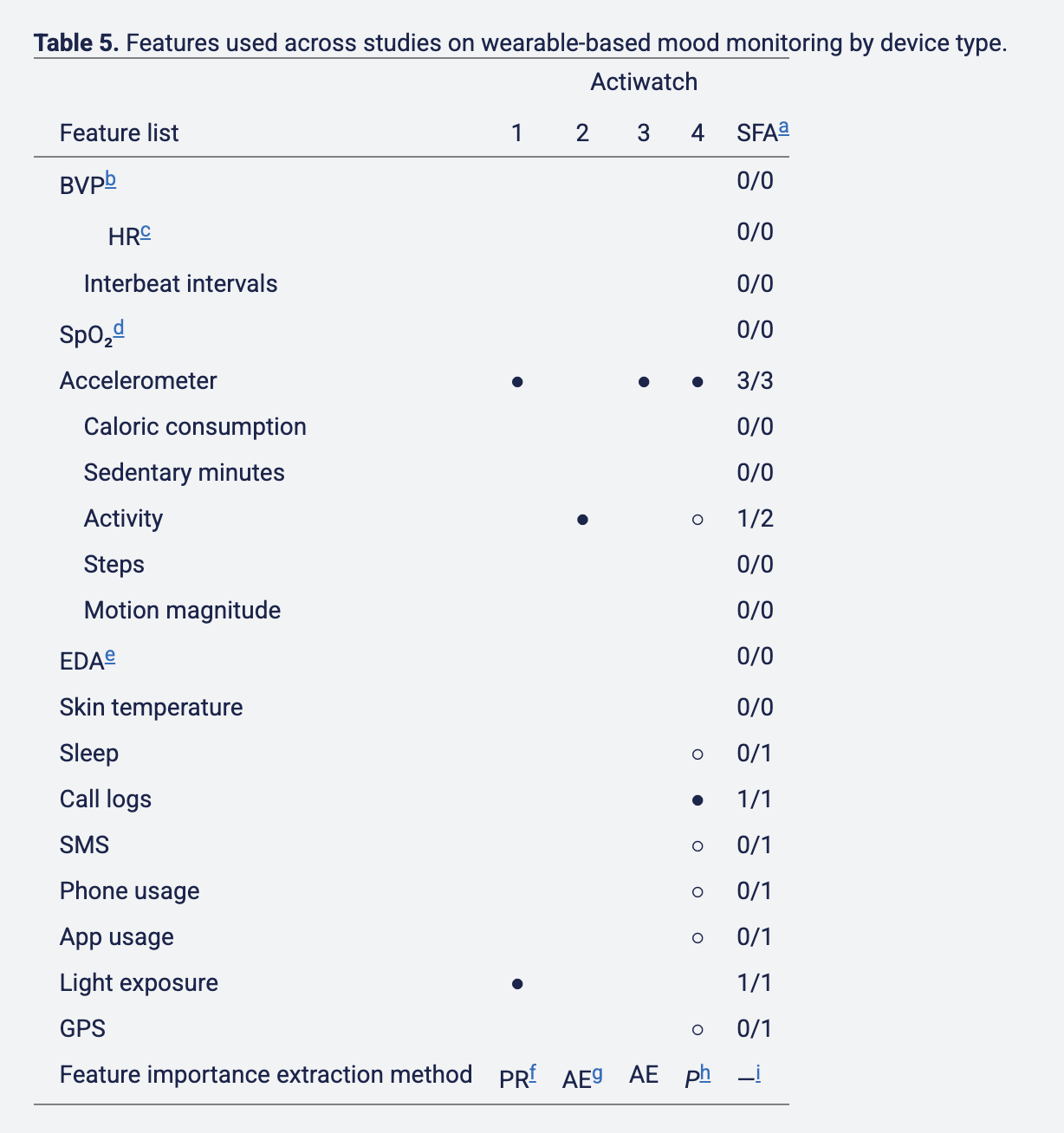
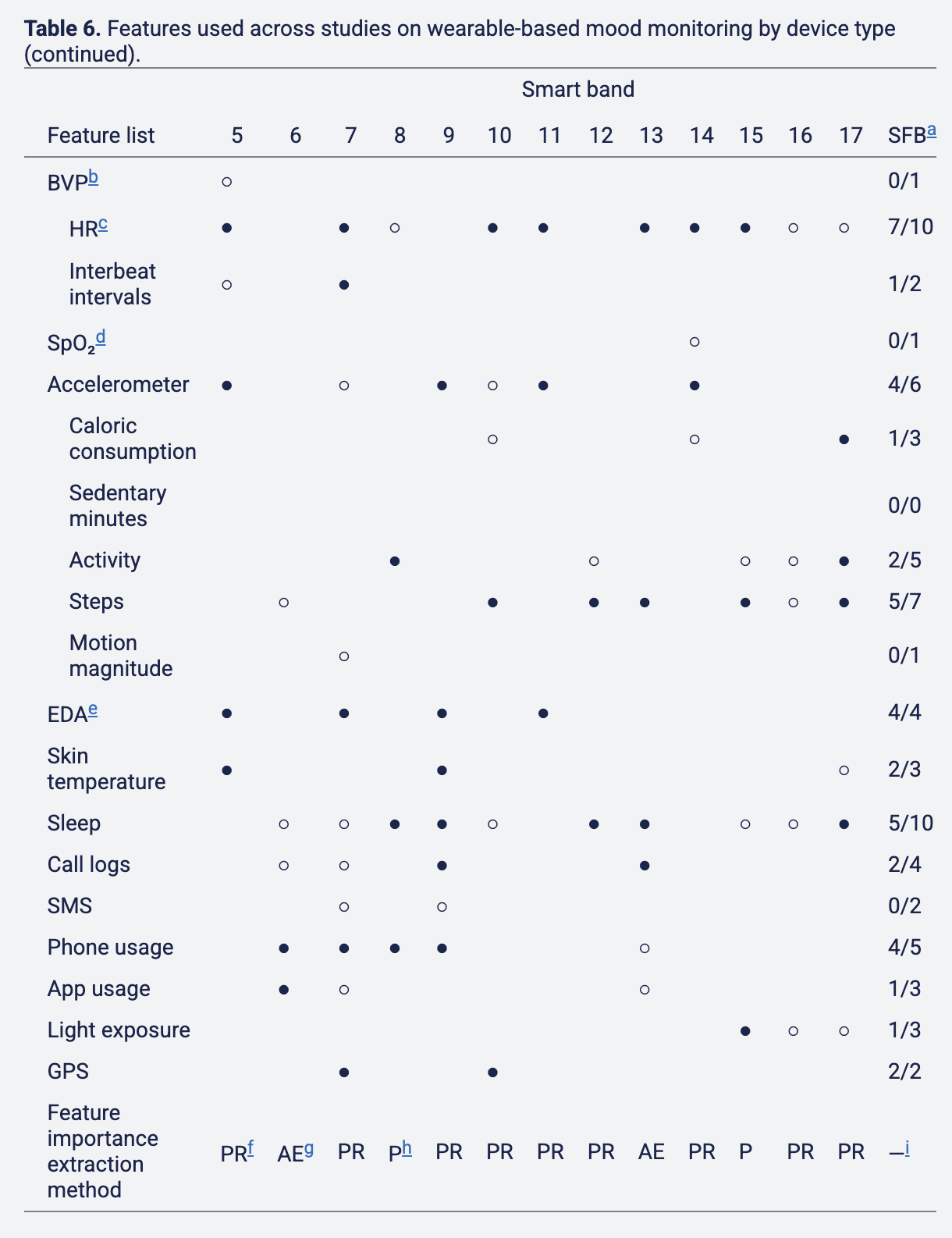
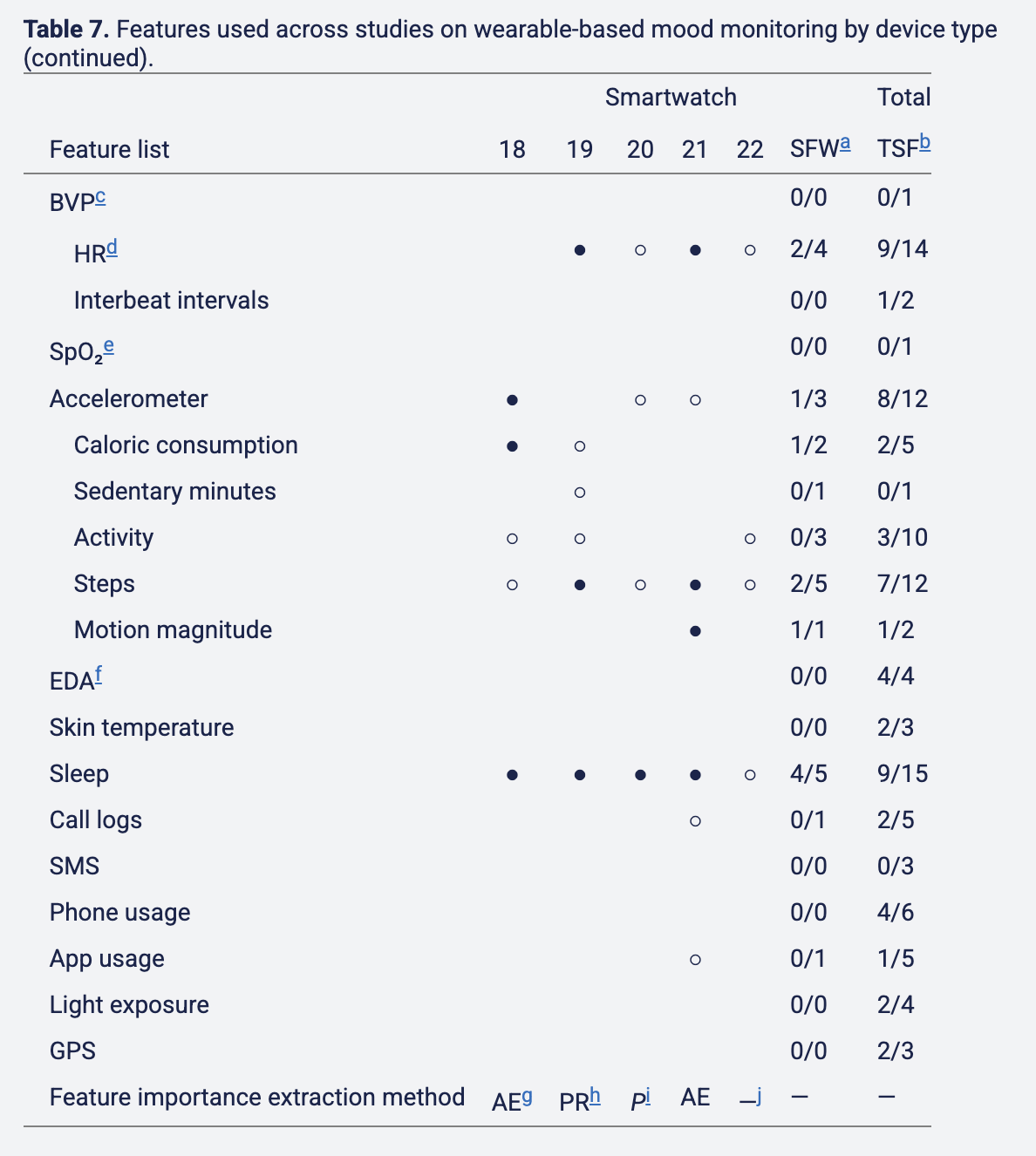
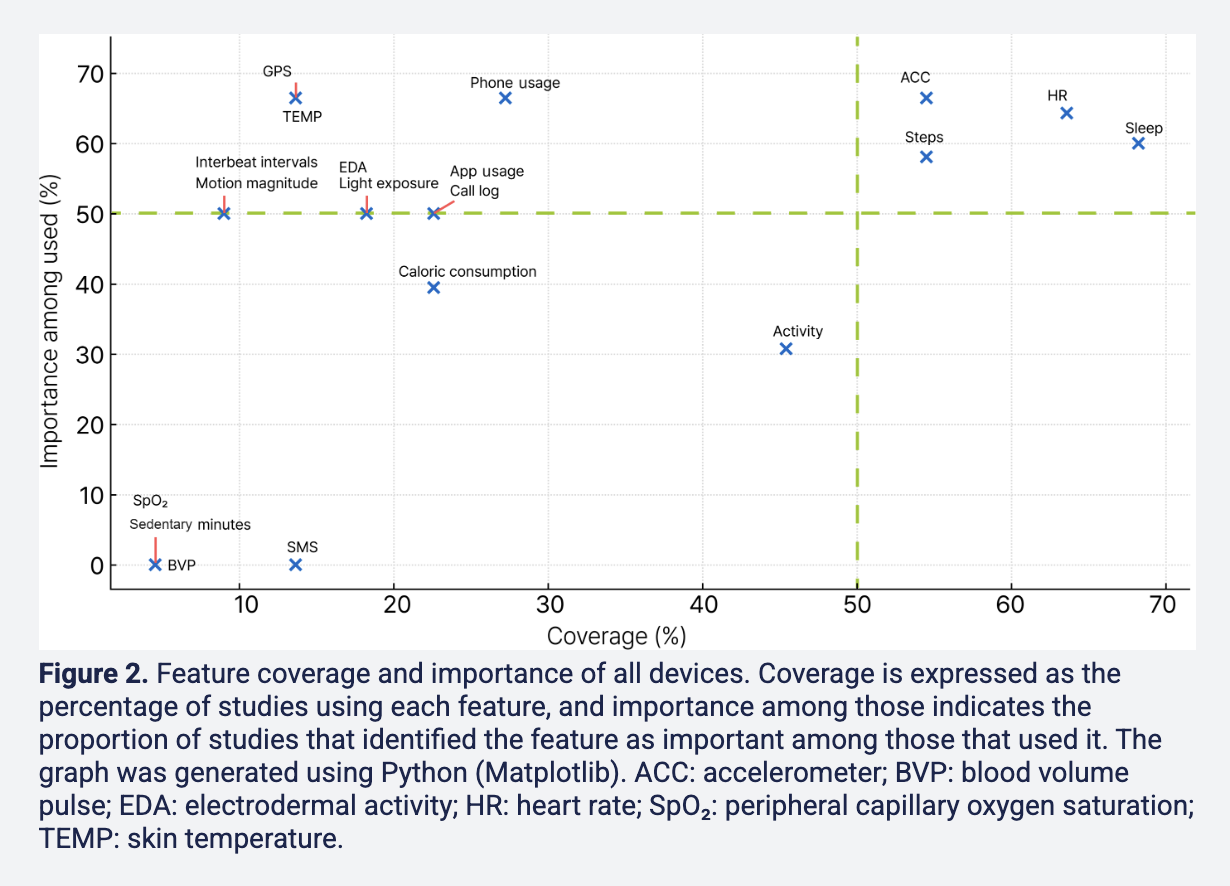
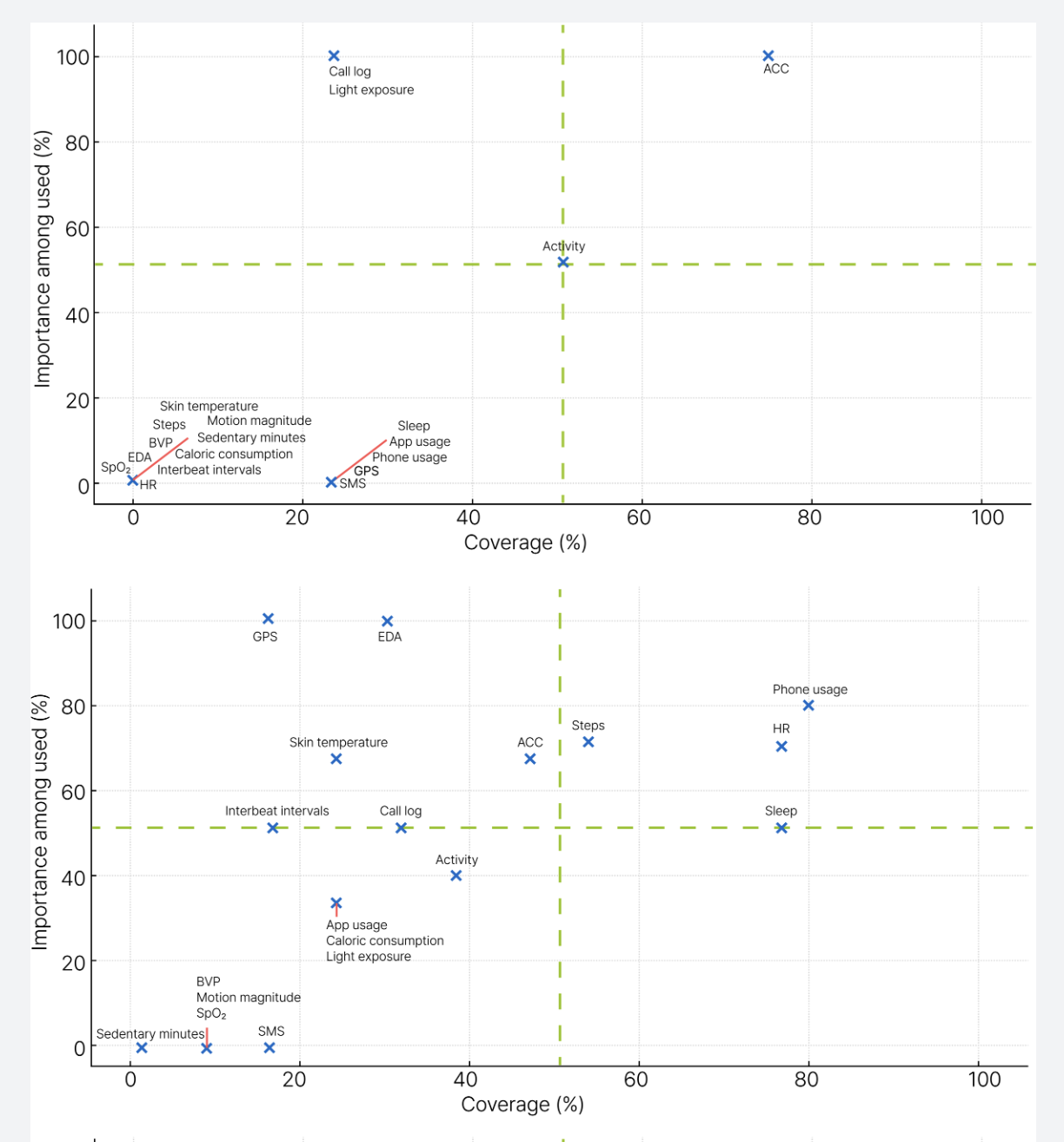
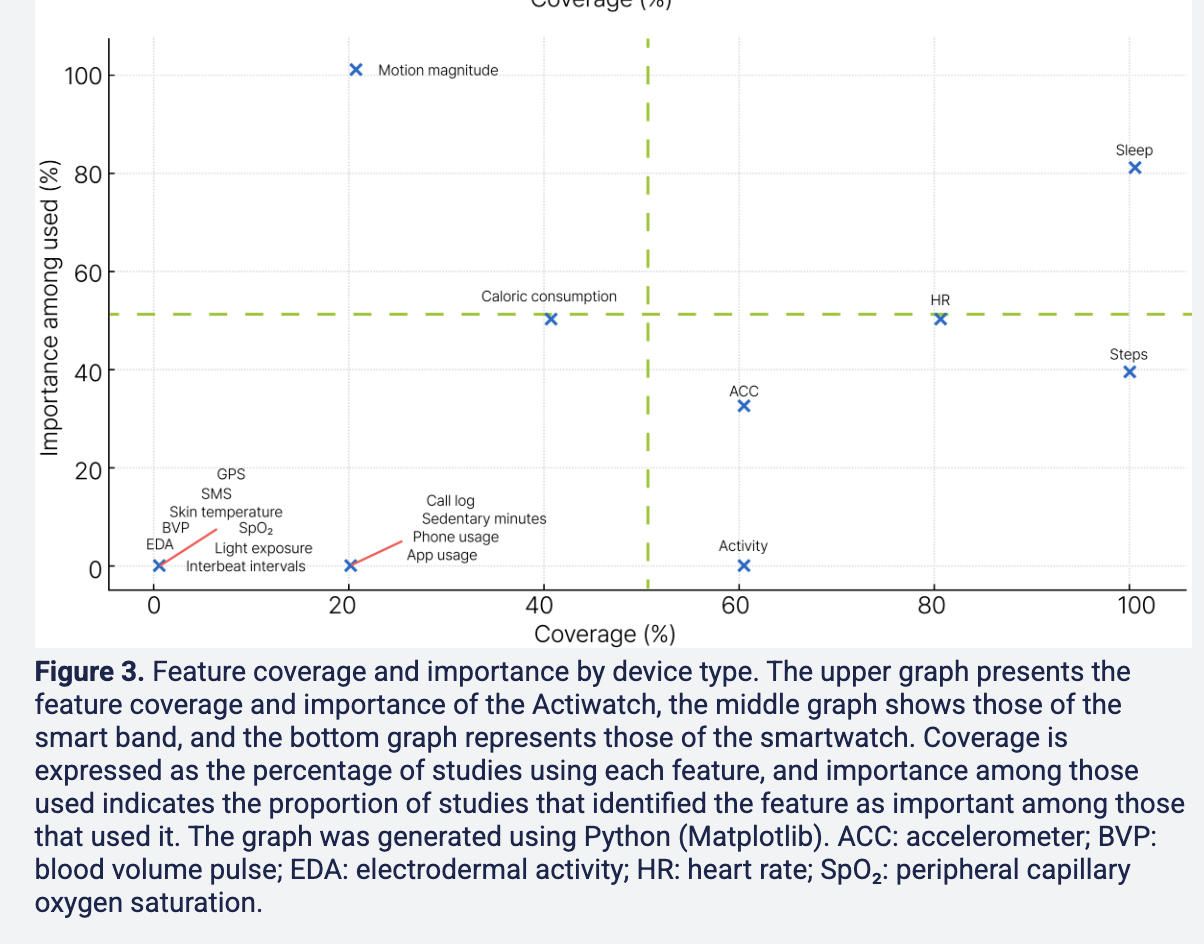
The systematic classification and visualization of features revealed distinct patterns of feature usage in the literature. The all-devices synthesis further identified a core feature package that digital phenotyping studies should prioritize: accelerometer, HR, steps, and sleep, which cluster in the first quadrant of Figure 2.
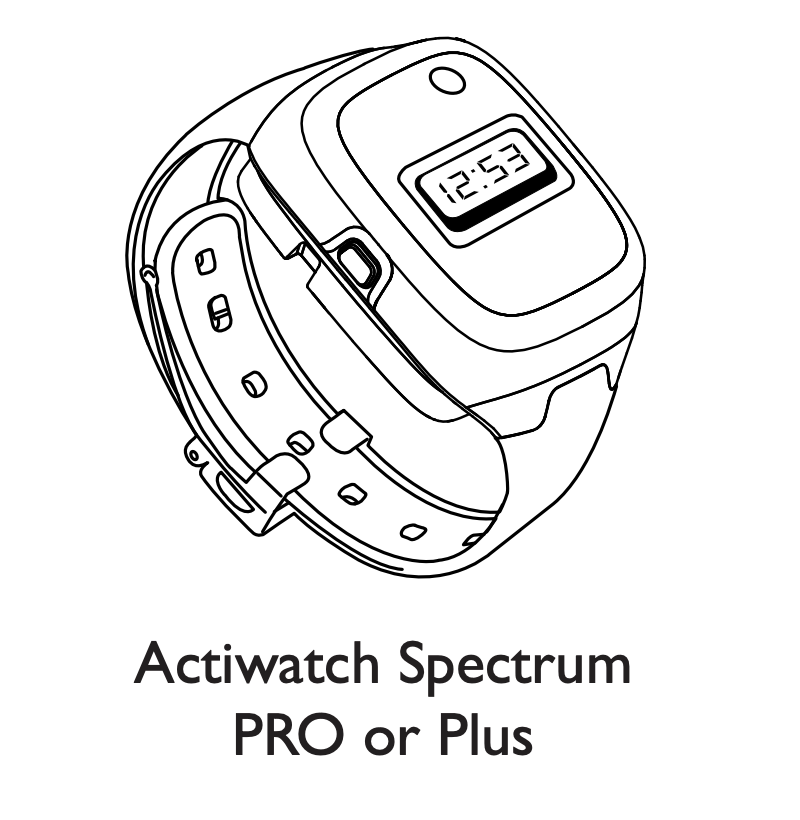
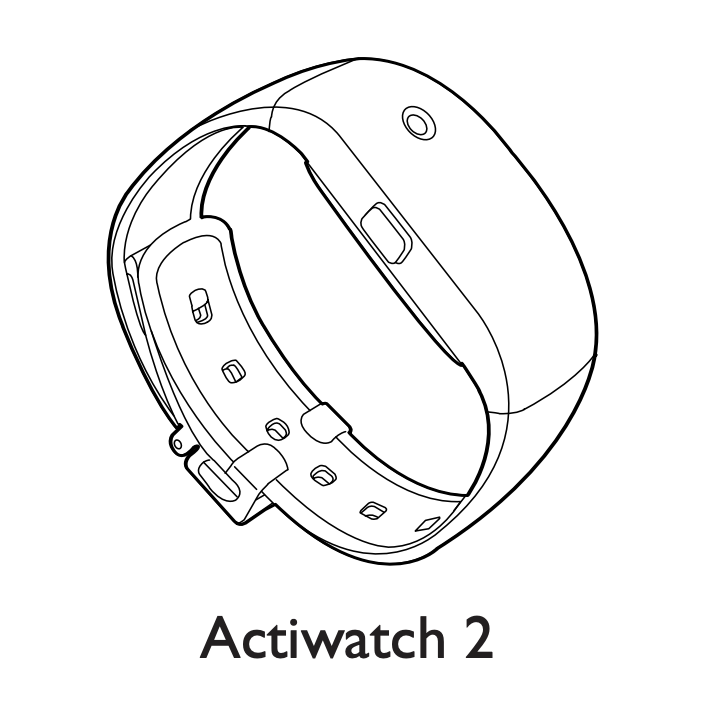
“The Actiwatch devices are wrist-worn activity data recorders that can record data relevant to circadian rhythms and sleep parameters in any instance where quantifiable analysis of physical motion is desirable.”
— Philips.com’s guide on Actiwatches
“Results showed a strong trend that women in the PPD cohort wore their Fitbits more those without PPD during the postpartum. We hypothesize this may be attributed to hypervigilance, given the common co-occurrence of anxiety symptoms among women with PPD. Future studies should assess the link between PPD, hypervigilance, and wear time patterns.” — # Unlocking the potential of wearable device wear time to enhance postpartum depression screening and detection
“While it has been shown that digital biomarkers from wearables, such as the Fitbit, combined with ML can provide insight into mental health conditions, patterns of wear time remain relatively unexplored. Prior studies exploring wearable device wear time have mainly taken place in the human-computer interaction field in a general population and disease-agnostic setting”
“…analyses from the Framingham Heart Study suggest that higher depressive symptoms are associated with lower smartwatch use, defined as wearing the device for more than five hours at least one day of the week.”